

Whether ELARA is a suitable alternative to UpKeep depends on your workflows, sites and requirements. A useful comparison tests the same cases and service scope. Blanket claims that one provider is always cheaper or better offer little decision support.
Compare specific tasks
UpKeep's own product information describes work orders, asset management, preventive maintenance and spare parts management. Scope and conditions depend on the offering. Check UpKeep's current product and pricing information against your requirements. Research checked on 6 November 2026.
ELARA also provides capabilities for daily maintenance. The functions, implementation and support included in an offer must be specified. Identical feature names do not establish identical workflows.
Five cases for a useful trial
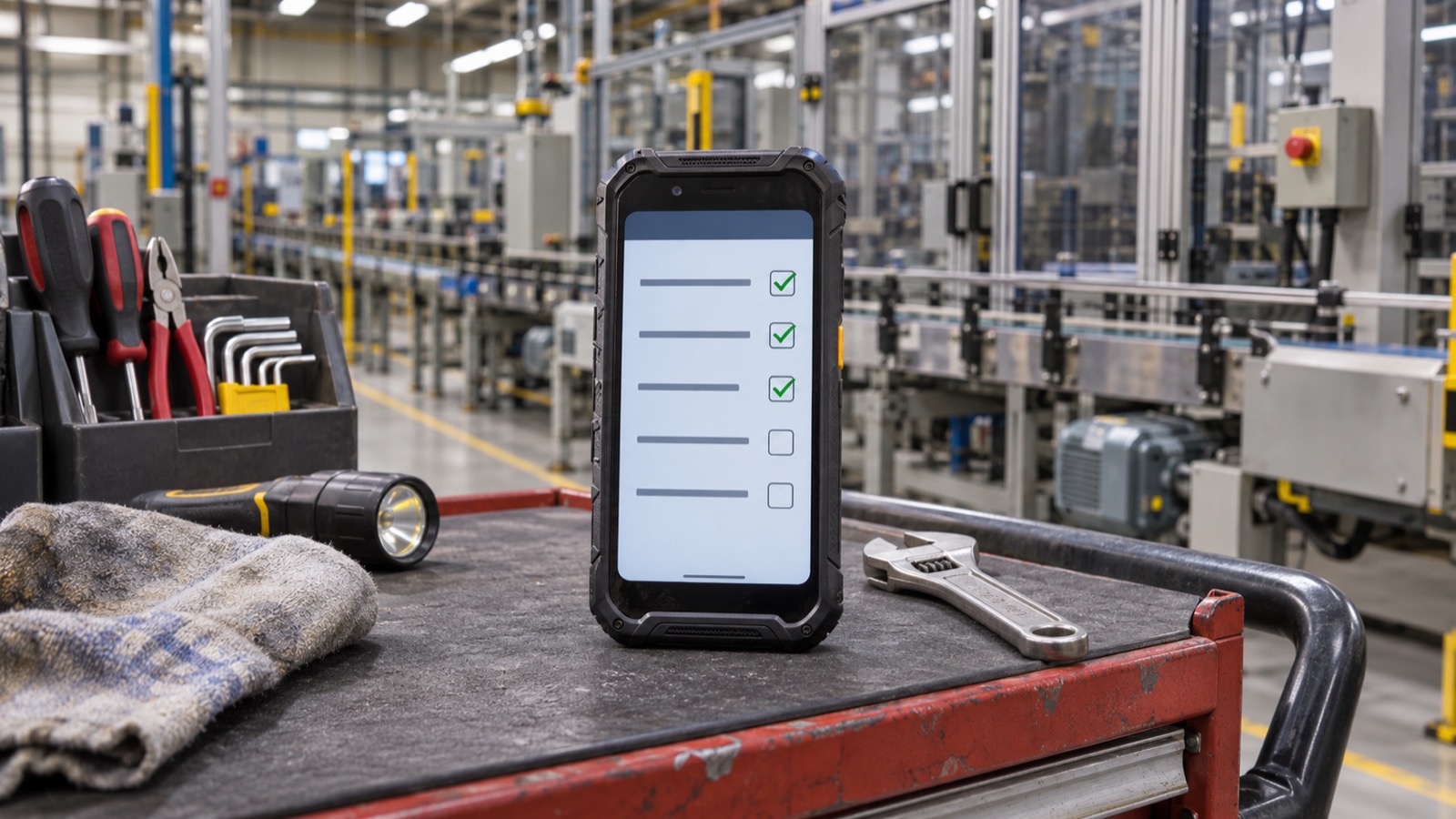
- Report a fault, connect it to the correct asset and assign a priority.
- Prepare an order with required parts, complete the work and record understandable feedback.
- Schedule recurring maintenance and turn a finding into an assigned follow up task.
- Record a spare part transaction and trace its connection to an asset and order.
- Find and export a completed job with its attachments.
Ask technicians to work through their own examples. Record missing steps and questions. Assess actual team effort rather than only the vendor presentation.
Assess integrations separately
For every connection, identify the source, destination, data, direction and trigger. Establish who handles failures and maintains the integration after changes.
ELARA presents SAP PM and Maximo connectors as planned concepts. API access or an integration diagram does not demonstrate a working connector. Request concrete evidence for any data flow on which your operation will depend.
Compare total cost and implementation
Use the same time period and required roles. Include software, configuration, migration, training, integrations and ongoing support. Specify storage, exports and contract exit arrangements.
A pilot should have clear acceptance criteria: usable records, tasks that users can perform independently and accountable ownership. Bring your comparison cases to an ELARA demonstration. This creates a decision based on observable results.